Greetings from Terashima at Unfolding Bodywork.
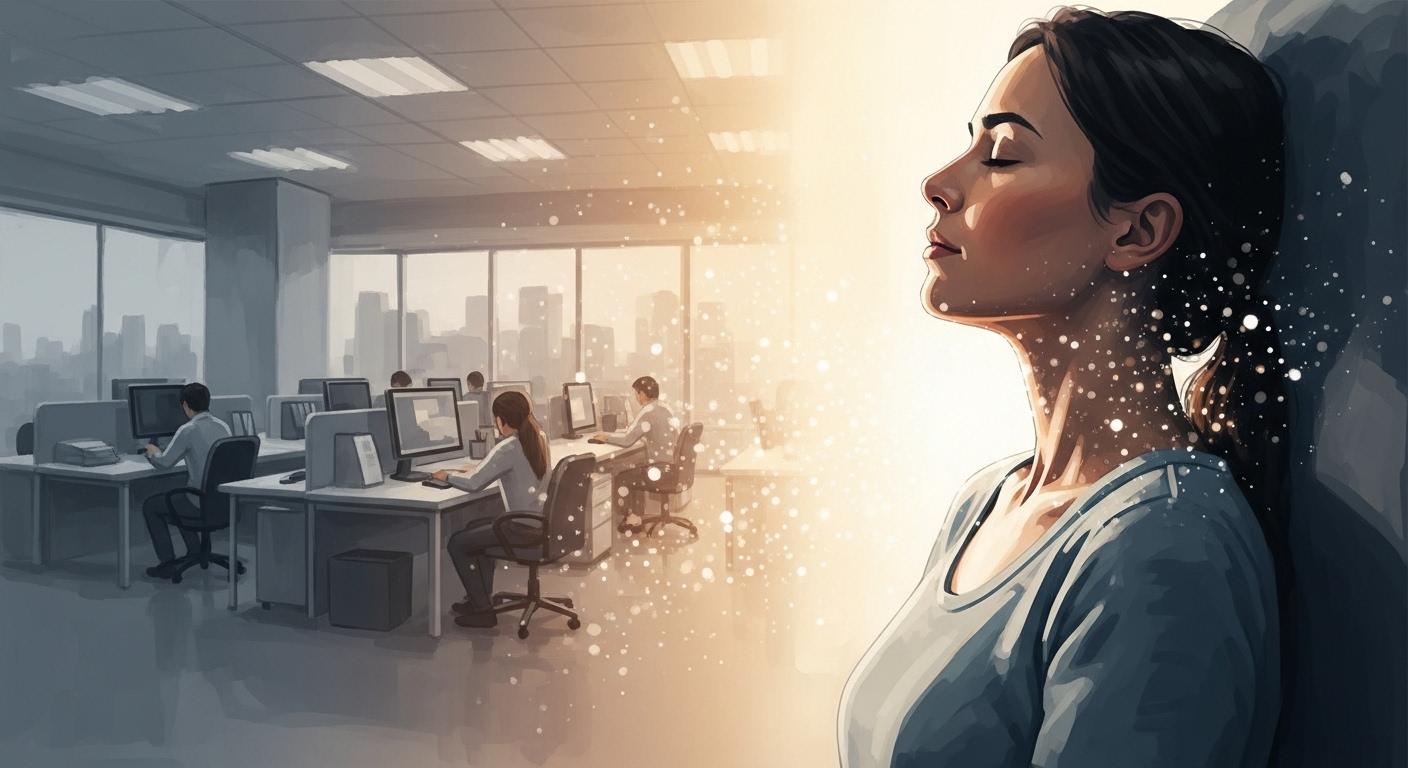
In moments of weariness, do you find yourself striving to command your autonomic nervous system into submission, perhaps urging, "I must find rest swiftly," or "I shall induce relaxation"?
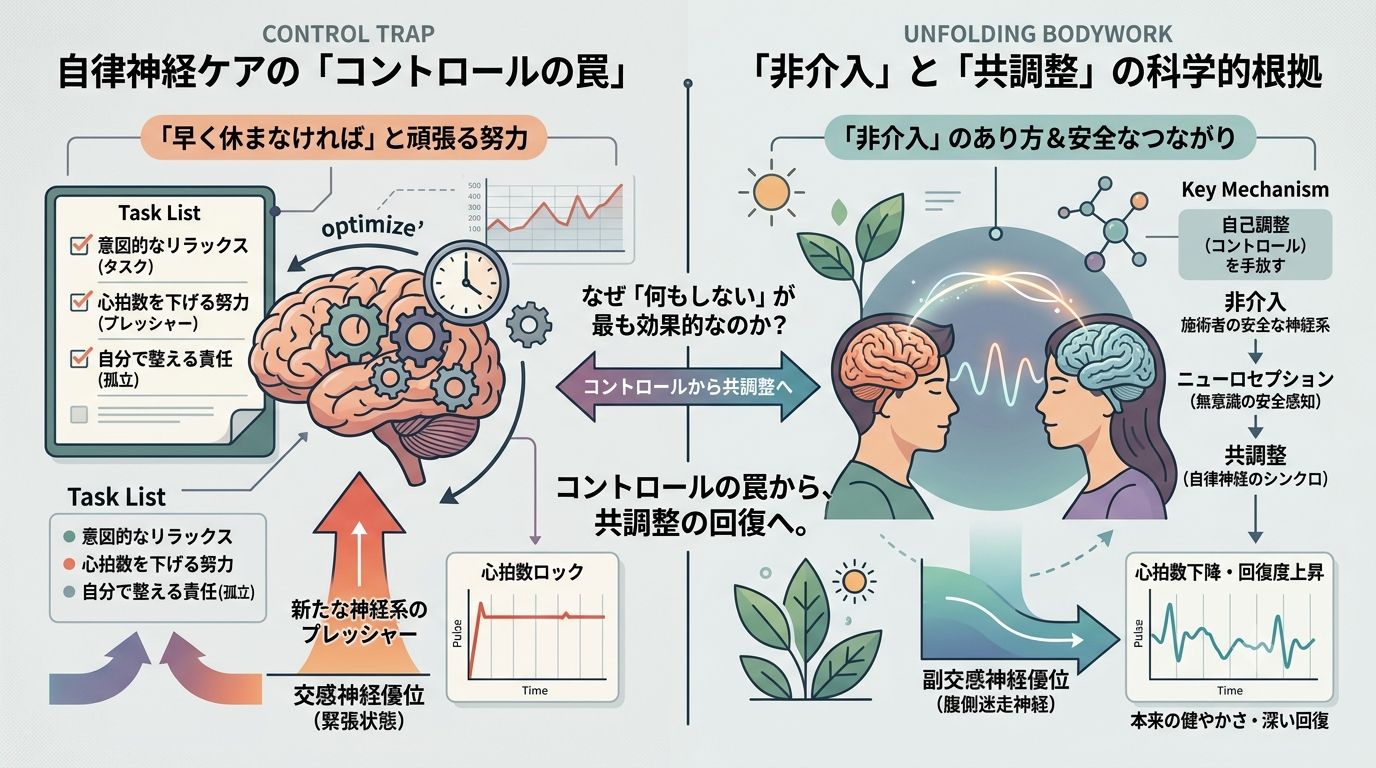
Yet, in truth, this very exertion—this conscious attempt to force your nervous system into alignment—often becomes an additional burden upon your autonomic functions, paradoxically prolonging the very states of tension you seek to release.
Today, drawing from my own meticulously gathered physiological data, I shall illuminate the "entanglement of control" that often lies hidden within autonomic nervous system care, and unveil why we cherish the principle of "non-intervention" (the art of doing nothing, of surrendering) as the cornerstone of the somatic therapy we have cultivated.
The 'Autonomic Stasis' Revealed in Sleep and Daytime Metrics
Just recently, I undertook an arduous day-long journey, driving from Kyoto to Tokyo, followed by a night in a dormitory (shared accommodation), and then devoted the subsequent morning to instructing a workshop.
Upon comparing the profound imprint of this strenuous travel and the accompanying tension on my autonomic nervous system with the serene rhythm of my daily life in Kyoto, a set of profoundly intriguing metrics came to light.
1. A Glimpse into Slumber: The Brain's Vigilant Posture
| Measurement Environment | Average Heart Rate | Recovery Score (RMSSD) | Autonomic Nervous System Age |
|---|---|---|---|
| Routine Sleep in Kyoto (Average) | 62.3 bpm | 45.8 ms | Equivalent to approx. 54 years old |
| Sleep in Tokyo (Last Night) | 68.4 bpm | 33.3 ms | 85 years old ⚠️ |
Even amidst the sanctuary of sleep, my heart rate in Tokyo remained elevated, while my recovery score experienced a precipitous decline of approximately 27%.
The profound root of this degradation lay not predominantly in the dormitory's ambiance itself, but rather in the preceding "full day of arduous, long-distance driving from Kyoto to Tokyo." As I sustained speeds of 80-100km/h, my brain was relentlessly engaged in processing a torrent of incoming visual information, moment by millisecond, while my body remained ensnared in subtle, continuous muscular tension. This relentless demand caused the sympathetic nervous system—the body's accelerator—to become profoundly locked in a state of full engagement. The shared space of the dormitory, with the subtle presence of others, then served as an 'amplifier,' further perpetuating this heightened state of hyper-arousal.
2. Post-Nap Reflection: Slumber Devoid of Restoration
The following day, after instructing, with mental and physical fatigue at its peak, I sought repose through a brief nap to somehow rest my body. However, the measurements taken immediately thereafter revealed the following:
| Measurement Environment | Average Heart Rate | Recovery Score (RMSSD) |
|---|---|---|
| Routine Daytime in Kyoto (Average) | 80.8 bpm | 27.6 ms |
| Post-Nap in Tokyo (First Half of Measurement) | 94.3 bpm | 25.0 ms |
Though I sought repose by lying down, my heart rate remained stubbornly elevated, soaring approximately 14 BPM above my customary daytime rhythm, while my recovery score lingered in a state of depletion. This persistent activation stemmed from the lingering "embers of sympathetic lock" ignited by the previous day's extensive drive, compounded by the mounting tension of the morning's work. The very conscious intention to "somehow attain rest through sheer will" paradoxically transformed into a new 'task' for the brain, actively hindering the crucial deceleration of the sympathetic nervous system.
The Brake That Stirred to Life the Moment Human Connection Emerged
Yet, as this period of "subdued flight" persisted, an astonishing shift occurred: the moment I was gently addressed and engaged in an unassuming conversation, my autonomic nervous system displayed a remarkable response.
The recovery score, which had lain low and inert, surged dramatically to its peak for the day—`31.3 ms`—within the immediate five minutes of initiating this exchange, and my heart rate concurrently softened.
Alas, as this fleeting dialogue concluded, the recovery score swiftly receded, plummeting to `17.0 ms`.
In the intricate dance of autonomic nervous system regulation, two primary pathways exist: "Self-regulation," an endeavor to orchestrate one's own internal landscape through individual effort; and "Co-regulation," a profound attunement to the secure and resonant nervous system of a trusted other.
Human beings, by their very nature, are innately endowed with the capacity for "co-regulation"—a mechanism wherein the autonomic nervous system finds its harmonious equilibrium not through isolated, solitary striving, but through secure, interconnected engagement with another. It was precisely in those fleeting moments, as the deliberate striving to "achieve relaxation" was released, and I surrendered into the solace of a reassuring exchange with another, that the autonomic nervous system's innate braking mechanism profoundly engaged.
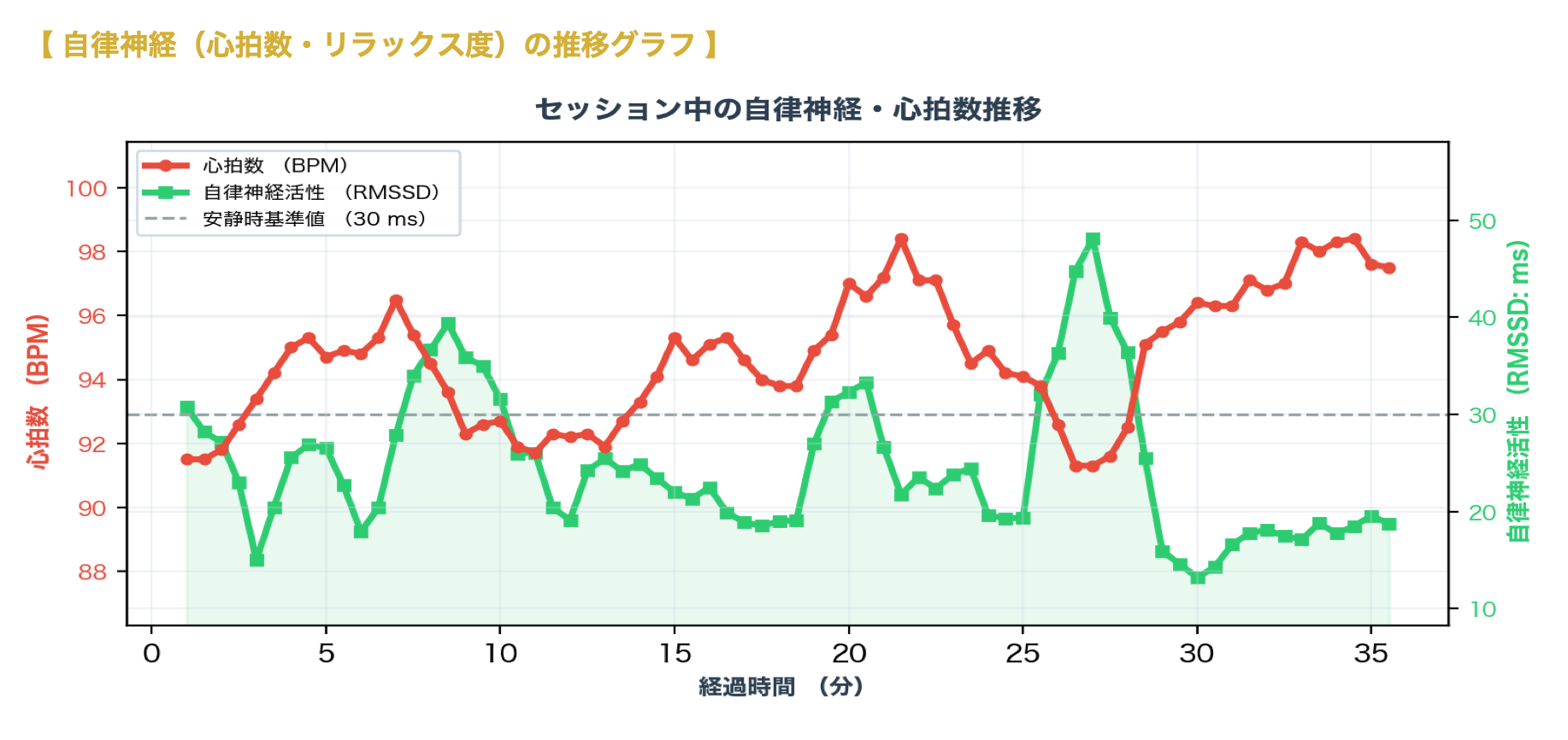
Notice the significant oscillation in autonomic nervous system recovery between the 25 and 28-minute mark, coinciding with human interaction.
Why Unfolding Bodywork Cherishes the Essence of 'Non-Intervention'
This very physiological tapestry reveals the profound rationale why, within the somatic landscape of Unfolding Bodywork—the therapeutic approach I have meticulously developed—we hold the practitioner's stance of "non-intervention" as paramount.
1. The Resonance of Autonomic Nervous Systems: An Echo through Polyvagal Theory
The exquisite phenomenon of autonomic nervous systems resonating with one another finds its elucidation in Polyvagal Theory, specifically through the profound concept of "neuroception"—the unconscious sensing of safety or threat.
Our own nervous system, with an immediacy far surpassing conscious thought, perpetually discerns the subtle nuances of another's facial musculature, the gentle timbre of their voice, the rhythm and depth of their breath, and the nuanced tension within a hand's touch.
Should a practitioner enter a session with the explicit intention to "unravel tightness" or "rectify imbalance," their brain inherently registers this as a task, thereby activating sympathetic dominance—a state of subtle internal tension. In turn, from the practitioner's own being, an unconscious resonance of this subtle tension is invariably emitted.
The client's perceptive nervous system, discerning this subtle undercurrent of tension, registers it as "a controlling force—an implicit threat." In response, its protective sympathetic branches spring to dominance. The profound consequence is a fundamental impediment to the body's innate capacity for release and softening.
2. The Profound Distinction from Conventional Therapeutic Modalities
Many prevalent forms of bodywork and massage typically perceive the client's physique as an "object to be managed and corrected," enacting an external approach—an intervention—driven by the practitioner's deliberate will.
In profound contradistinction, Unfolding Bodywork steadfastly embodies the principle of "non-intervention."
The practitioner within Unfolding Bodywork completely relinquishes the conscious directive to "fix" or "heal," choosing instead to simply hold space, receiving what is without judgment, and patiently awaiting. As the practitioner themselves releases all attempts at control and settles into a profound state of deep relaxation (where the ventral vagal nerve pathways are dominant), this palpable state of nervous system safety gently resonates through the client's neuroception, allowing their nervous systems to naturally synchronize in exquisite co-regulation.
It is only when the client's profound inner knowing—their brain—registers, "Here, I am utterly and unequivocally safe," that the body truly begins to naturally unfold by its own intrinsic wisdom, ushering in a profound recalibration of the autonomic nervous system and the genesis of authentic restoration.
When both body and mind gently release the arduous endeavor of self-control, choosing instead to simply surrender into the embrace of safe connection and the organic currents of life, the autonomic nervous system begins its graceful return to its innate state of vibrant well-being.
🌿 An Invitation to Your Session
If you find yourself at the precipice of exhaustion from ceaselessly striving to self-regulate your autonomic nervous system, perhaps it is time to gently release that tenacious grip of control and step into a new possibility.
At Unfolding Bodywork, our practitioners consciously and completely relinquish any intervention driven by the impulse to control, offering instead a deeply safe and resonant 'field' that gently awakens your body's inherent wisdom for self-regulation.
Beyond merely receiving a treatment, we extend an invitation to experience the profound solace of simply yielding your being within a safe and attuned relationship, allowing your body to naturally unfold with grace and ease.
For a deeper understanding of our session offerings and to reserve your experience, please follow the link below.