“I always feel tired for some reason.”
“My shoulders and neck are perpetually stiff, and massages only offer temporary relief.”
“A persistent sense of vague anxiety and irritation lingers.”
If these sentiments resonate with you, the root cause might just lie within your very “breath.”
Do you believe that “breathing is something we do automatically, without conscious effort”? While it's true we breathe unconsciously, many have forgotten the art of deep, restorative breathing, unknowingly perpetuating “shallow breathing.” This unconscious shallow respiration, in fact, could be the silent culprit behind your mind-body imbalances.
Is Your Breath Truly Deep? The Subtle Signs of Shallow Breathing in Modern Life
Let us begin by exploring whether your breath exhibits any signs of shallowness.
・Frequent sighing: A subconscious attempt to exhale deeply and regulate breathing.
・Persistent tension in shoulders and neck: A possible indication that the diaphragm is underutilized, forcing shoulder and chest muscles to compensate for respiration.
・Tendency towards a hunched posture: A constricted rib cage prevents the lungs from expanding fully, inviting shallow breathing.
・Difficulty sleeping or waking unrefreshed: Deep breathing fosters relaxation and enhances sleep quality, a benefit elusive with shallow breaths.
・Lingering feelings of vague anxiety or tension: Shallow breathing often tips the autonomic nervous system towards sympathetic dominance.
・Inability to sustain concentration: Potentially due to insufficient oxygen supply to the brain.
・Feeling cold easily or infrequent sweating: This can be linked to a decrease in metabolic activity.
Should any of these signs resonate with your experience, your breath may, unbeknownst to you, have grown shallow.
The Science of Shallow Breathing: Mechanisms and Mind-Body Impacts
Why, then, does our breath become shallow? And what profound effects does this hold for our mind and body?
Our bodies, when confronted with stress or tension, instinctively tend to adopt shallow, rapid breathing. This is a primal defense mechanism, part of shifting the body into a state of sympathetic dominance, enabling an instantaneous "fight or flight" response to perceived danger.
Naturally, the majority of our respiration is facilitated by the vertical movement of the diaphragm, a large, dome-shaped muscle nestled between the abdomen and chest (abdominal breathing). When the diaphragm moves expansively, the entire lungs efficiently inflate, allowing for abundant oxygen intake and thorough carbon dioxide expulsion.
However, prolonged stress, extensive desk work, or a habitually hunched posture can cause the diaphragm to stiffen, restricting its natural movement. In response, the body compensates by engaging the muscles of the shoulders, neck, and chest (such as the trapezius and sternocleidomastoid) to force lung expansion. This compensatory action often becomes the root of chronic shoulder stiffness and neck tension.
This shallow chest breathing consequently leads to a cascade of detrimental effects:
・Oxygen Deprivation and Carbon Dioxide Excess: Fresh air fails to reach the deeper regions of the lungs, leading to chronic oxygen deficiency throughout the body. Concurrently, the expulsion of carbon dioxide stagnates, rendering the body’s pH balance susceptible to disruption.
・Autonomic Nervous System Imbalance: Shallow breathing perpetuates sympathetic dominance, trapping the mind and body in a perpetual "fight or flight" mode. This inhibits the parasympathetic nervous system, which promotes relaxation, contributing to various ailments such as insomnia, irritability, constipation, and a weakened immune system.
・Muscular Hypertonicity and Postural Deterioration: The shoulder and neck muscles, constantly engaged to compensate for the diaphragm, remain in a state of chronic tension, leading to stiffness and headaches. Furthermore, postures associated with shallow breathing exacerbate kyphosis (rounded back), perpetuating further bodily misalignment.
Indeed, shallow breathing can become the very genesis of your "vicious cycle of ill-health."
“Effortless Breath” – A Homecoming to Your Authentic Self
In my twenties, I myself struggled with severe shoulder stiffness, so debilitating that I couldn't even lift my arms, and my back felt as rigid as an iron plate. Acupuncture provided only temporary relief, prompting me to question, "Why does it always revert so quickly?" This inquiry became the catalyst for my journey into bodywork. It was then, when an acupuncturist asked me, "Does your breathing feel easy?" that I was struck by the realization that I hadn't even noticed how shallow my own breath had become.
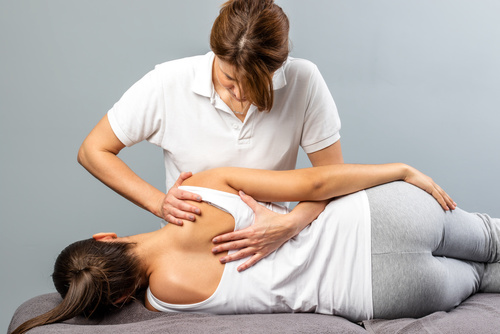
At Unfolding Bodywork sessions, unlike superficial massages, we gently release deep-seated tensions within the body through subtle touch. As the body begins to soften and the diaphragm reclaims its natural movement, many clients experience a resurgence of an "effortless breath," perceiving profound shifts across their entire mind and body.
This is a process of liberation from the stresses you have unconsciously suppressed and adapted to, a journey to reclaim your inherent, deeper, and freer breath. Profound breathing, in turn, harmonizes your autonomic nervous system, fosters mind-body relaxation, and draws forth vitality from within.
"I often hear about paying attention to or being aware of one's body these days, and not noticing things like my breathing means I probably haven't been paying attention at all. I think I'll try to be more mindful of it from now on." (Female, 40s)
Like this client, the initial step toward reclaiming mind-body well-being is to first realize, "My breath might be shallow?" Unfolding Bodywork is here to profoundly support you in that realization.
Won't you reclaim the profound, abundant breath your body inherently possesses, and embrace a life of lightness, both in mind and body?