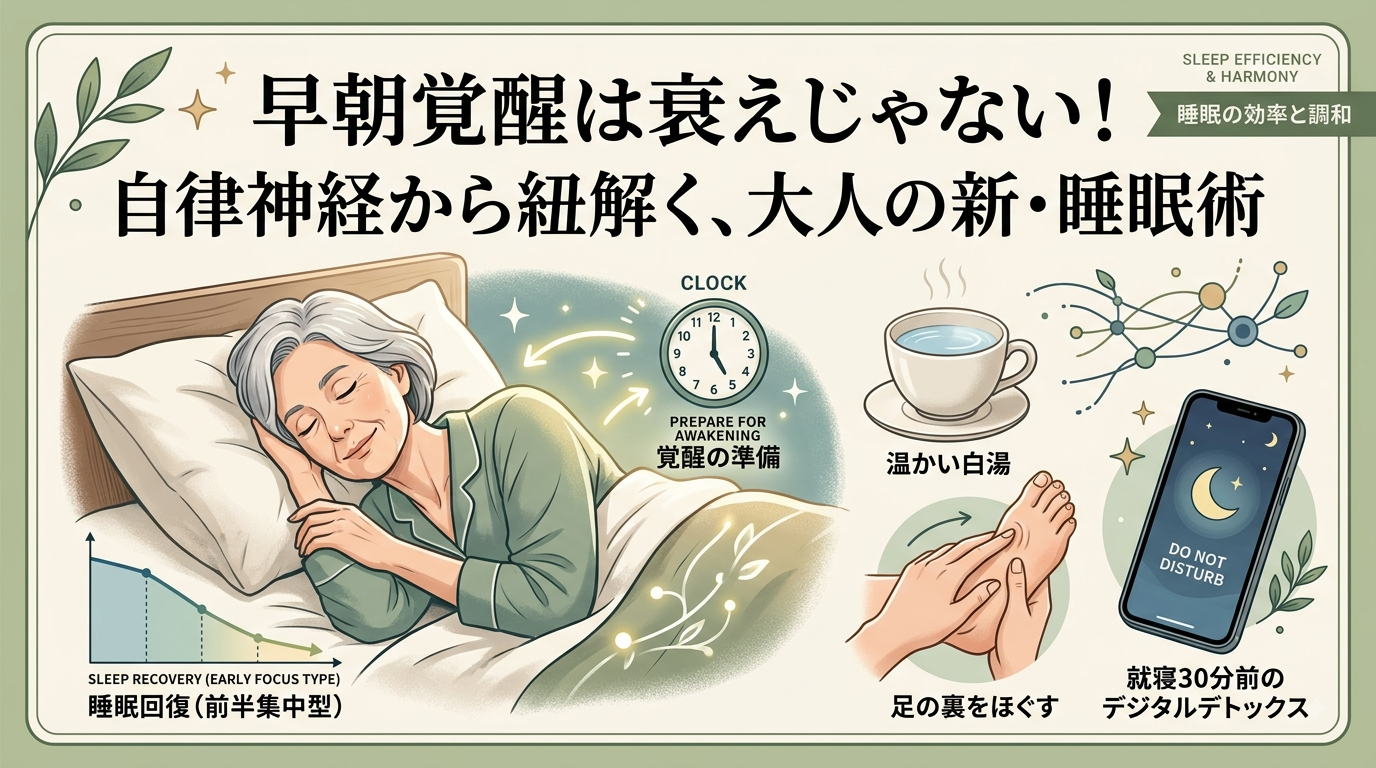
"Compared to years past, I find myself awakening earlier in the morning..."
"If I stir in the depths of the night, drifting back to sleep feels like a distant shore..."
As the seasons of life turn, many of us may find ourselves sensing this gentle shift in our sleep rhythms.
A quiet concern might arise: "Am I no longer resting deeply, perhaps my body is subtly diminishing?"
Yet, please allow your heart to be at ease.
As we unveil the insights from the latest Heart Rate Variability (HRV) analysis—a profound art of discerning the autonomic nervous system's balance from the subtle undulations of the heart's rhythm—it reveals not a diminishment, but rather "evidence that the body has gracefully shifted towards a more efficient process of rejuvenation, in harmony with its evolving age."
In this offering, we delve into the "individual nuances of sleep recovery patterns" unveiled by autonomic nervous system data, alongside the wisdom nurtured through the tapestry of human history, and share insights on "pre-sleep autonomic care" for mature souls to greet the morning with profound serenity.
🌿 Key Insights from This Journey
- Early morning awakenings are not a sign of the body's diminishing vitality, but a graceful, natural adaptation to an efficient, front-loaded rhythm of rest.
- Empirical Heart Rate Variability data reveals that each individual possesses a unique "sacred window for cellular rejuvenation."
- Rather than fixating on the "duration" of sleep, it is paramount to elevate the quality of the initial hours of rest through mindful pre-slumber self-care.
📊 Revealed by Data: The Two Core Architectures of Sleep Restoration
By attuning to the subtle undulations of our heart's rhythm (Heart Rate Variability), we can visually discern, through quantifiable metrics, precisely when our autonomic nervous system (specifically, the parasympathetic nervous system governing rest) becomes activated during sleep, orchestrating a return to profound mind-body harmony.
Intriguingly, within the sacred process of nocturnal restoration, two distinct archetypes of recovery unfold.
🔍 Empirical Measurement Data (A Comparative Glimpse)
These are authentic metrics comparing heart rate and relaxation levels (autonomic nervous system activation) for a single night's sleep (approximately 6-7 hours), equally segmented into "Initial," "Mid-Phase," and "Latter Phase."
※A lower heart rate and a higher Relaxation Index (ms) both signify a deeper state of bodily repose.
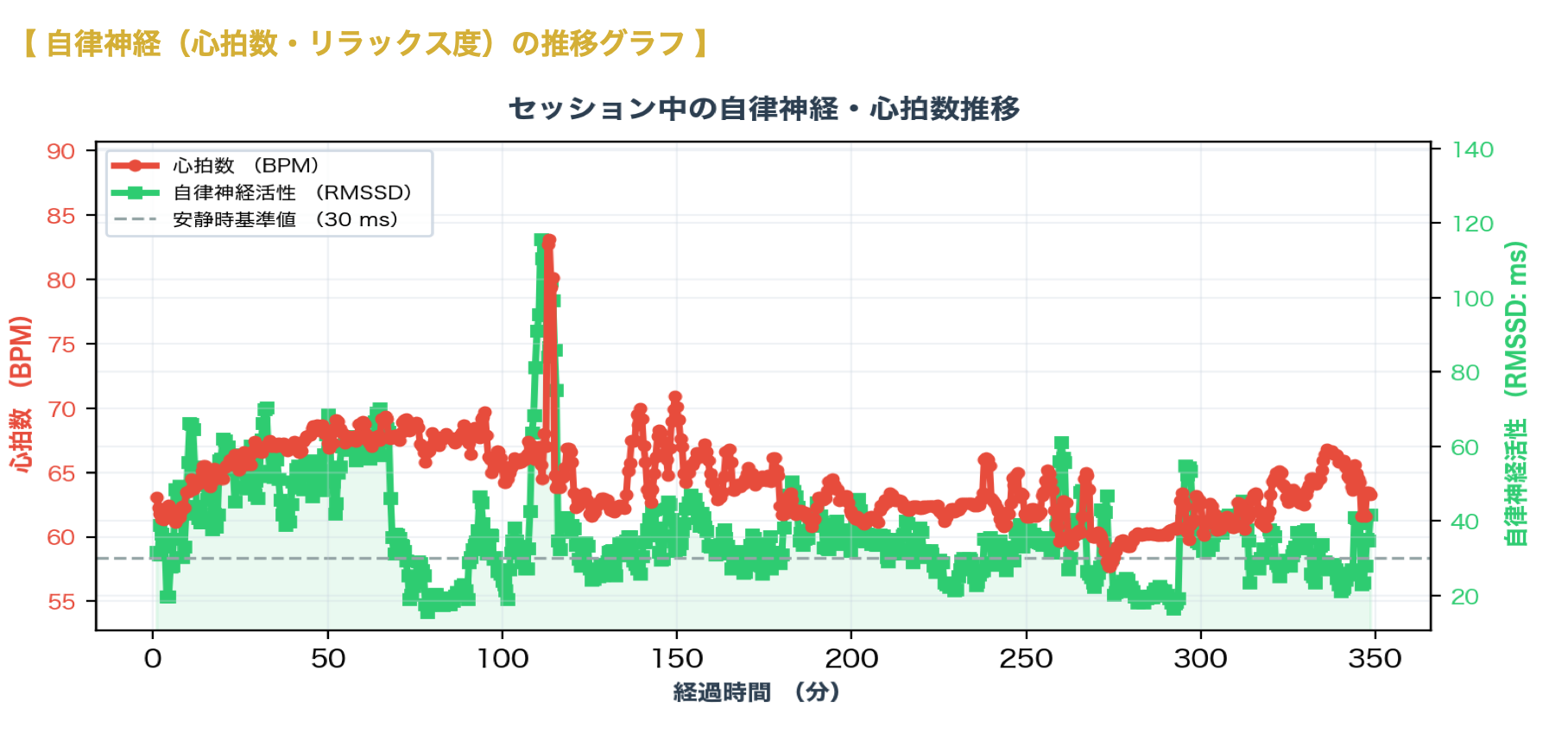
A Woman in Her 50s: Front-Loaded Restoration Archetype
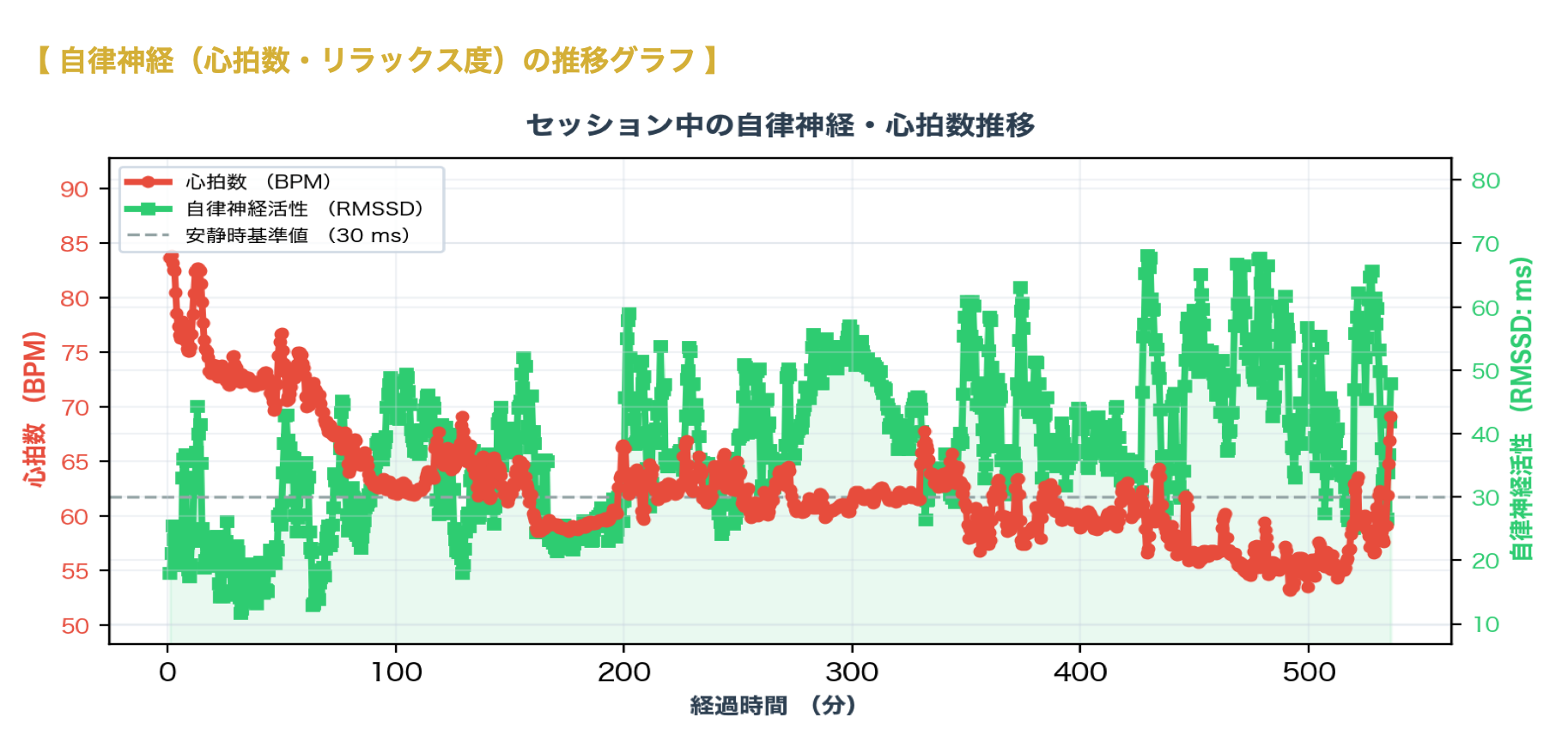
A Man in His 40s: Late-Surging Restoration Archetype
While Ms. A's Relaxation Index peaks at "45.8 ms" in the initial phase, Mr. B's surges to "67.6 ms" in the latter phase, clearly illustrating that their peak restoration times are distinctly reversed. This profound individuality in the "sacred window for mind-body rejuvenation" (a reflection of constitutional differences) is evident from person to person.
⏰ Why Does the Dawn Call Earlier as We Gracefully Age?
The phenomenon of "early morning awakenings" is a natural unfolding, predominantly observed in Archetype ①, the "Front-Loaded Restoration" pattern.
This bears three profound reasons, akin to the body's intrinsic wisdom.
1. The "Forward Shift" in Our Circadian Rhythm
As we traverse the path of aging, the very cycle of our biological rhythm—where body temperature descends to invite slumber and ascends to greet wakefulness—naturally shifts forward by approximately one to two hours.
Consequently, a gentle drowsiness arrives earlier, and the body's readiness for awakening is complete by the early hours of 4-5 AM.
2. A Gentle Transformation in the Secretion of Our Sleep Hormone, Melatonin
The secretion of melatonin, the hormone that cradles our nocturnal rest, gently evolves with age.
This natural inclination towards earlier awakenings in the morning is a testament to this subtle progression of our biological rhythm.
3. The Concentration and Refinement of Deep Sleep (Non-REM Sleep)
For mature souls, sleep tends to swiftly accomplish the body's essential "deep restoration (Non-REM sleep)" within the initial hours post-slumber onset, gracefully transitioning into lighter, shallower sleep in the latter phases.
In essence, awakening earlier is not an indication of diminished vigor, but rather a
"wise adaptation attained by the mature body: concentrating essential restoration within the initial hours, and then greeting the morning with a sense of ease and grace."
⛺ Column: The "Sentinel" System Forged by Human History (The Sentinel Hypothesis)
Let us rewind the tapestry of history to a time long past, when humanity lived in tribes amidst forests and caves.
If everyone were to fall into a deep, simultaneous slumber during the night, the tribe would be rendered vulnerable to external dangers, unable to protect itself.
Thus, forged through the crucible of evolution, was a survival strategy: "to subtly stagger sleeping hours according to age." In the science of sleep, this is known as the "Sentinel Hypothesis."
- Youth & Active Generations: Capable of activity late into the night, they assumed the role of "Nocturnal Sentinels."
- Senior Generations (Front-Loaded Restoration): Completing their rejuvenation swiftly in the early hours and awakening at dawn, they took on the role of "Dawn Sentinels."
For mature generations to awaken with the dawn is testament to the enduring presence of genes that once designated them as "trusted sentinels safeguarding the tribe's well-being." Viewed through this lens, do not these early awakenings feel like a source of pride, a cherished testament to the body's profound wisdom?
💡 Beyond the Query of "How Many Hours": The Sacred Art of Pre-Slumber Care
Should you awaken with the dawn and feel a surge of anxiety, "I must sleep more...", such striving can paradoxically sharpen your awareness and heighten internal tension.
The essence lies not in forcibly extending the hours of slumber.
It is, rather, "to gently facilitate the autonomic nervous system's graceful shift, enriching the quality of the initial hours of rest, particularly in the early phase, through mindful pre-sleep rituals."
Let us unveil three self-care practices, accessible from today, to gently invite profound and tranquil rest.
1. Crafting Nocturnal Stillness through "Digital Detox"
The intense luminescence from smartphones can disrupt the natural rhythms that beckon restorative sleep.
Withdraw from screens at least 30 minutes before bedtime, gently dimming the ambient light in your space to signal to your brain that "a peaceful night has arrived."
2. Harmonizing Inner Flow with Warm "Sayu" (Plain Hot Water)
Gently warming your internal organs with a comforting hot beverage initiates a subtle process where the body then releases heat from the extremities, guiding your core body temperature to gently descend.
This rhythm of gradually lowering body temperature naturally invites slumber, elevating the quality of rest in the moments immediately following sleep onset.
3. Mindful Touch: Gently Releasing the Soles of Your Feet
Gently cradling and releasing the soles of your feet and calves with your palms encourages a comforting release of warmth.
This serene touch upon the skin transmits a signal to the brain, whispering "here, you are safe," gently dissolving any tension held within your mind and body.
Sleep: Not Defined by "Duration," But by the "Quality of Autonomic Harmony"
Slumber is not to be measured solely by its "duration."
Even if the hours of sleep number merely five to six, a profound relaxation of the autonomic nervous system during those initial hours signifies that the mind-body has achieved ample rejuvenation and recovery.
Release the apprehension surrounding "inability to sleep," and transform the quiet moments before slumber into a "sacred time of harmony," a space for self-compassion.
With this simple shift, your mornings will undoubtedly unfurl with greater lightness and crystalline clarity.
This very evening, why not begin by slowly savoring a single cup of warm Sayu?